Thursday, July 4, 2013

Pet Friendly Fireworks Display


My husband did a more pet friendly version of our local fireworks display last year for anyone that would rather stay home with their fur kids and keep them company.

It is 3d so you can watch it in full screen and set the volume level so the dogs won't get scared :)

Feel free to share with other pet lovers :)


Be Well & Be Happy,
Pet~Pourri

Wednesday, July 3, 2013

So You Want to Give Up Your Pet

This post is a rant as well as educational...I hope.  This morning someone dumped this kitten in the weeds in the ditch in front of our house.  I don't think the two 'ladies' who dumped it saw my husband standing in the yard watching them.


This kitten can't be more than 2 months old.  She was just sitting there trying to figure out where she was and which way to go when my husband went out to get her after the 'ladies' left.  About 15 minutes later the county came by mowing the weeds on the sides of the road.  They do this about twice a year.  If my husband hadn't seen these 'ladies' dump this poor baby she could have been killed.  To dump an 8 week old kitten on the side of the road in the country is just the same as murder in my book.  What were you thinking?!?!?!

Dear Readers, please, if you want to give up a pet, take it to the shelter.  Most of them will wave the surrendering fee if you can not afford to pay it.  Do Not Dump Your Pet on the side of the road in the country.  You may think, oh, its in the country, a farmer will take it in or it can hunt for its food.  I can guarantee you that 95% of the pets dumped in the country will die.  Either from exposure, starvation, being hit by a car, or, yes, even shot by the farmer you thought would take it in.  If you dump your pet on the side of the road, you are a murderer!


Seriously, how is an 8 week old little kitten supposed to survive?  We have coyotes out here.  We've seen one running through our yard just this week.  8 week old kitten equals meal to a coyote.  Most farmers will shoot stray dogs they see running on their property.  For all they know it could be the dog YOU dumped that is killing their chickens.

Several years ago on New Years Eve we received a phone call from a person who said someone dumped a kennel with a dog who had just given birth in a trailer park where they live.  We dropped everything to go out and meet these people to save this mother and her pups.  Turns out the people who called were really the owners of the dog.  They told us they lied because they didn't think we would take them if they told us they owned the dog.  Click on the photo below to see the WOI News Story about this.


Please, I'm begging here, if you can not keep your pet, no matter what the reason, please take it to a shelter or a rescue.  Do not drive them out to the country and dump them.  Give them every chance they can get to find a new home.

By the way...this kitten is available for adoption if you are interested.  We have been calling her Lucky.

Be Well & Be Happy,
Pet~Pourri

Vacationing With Your Pet


We are at that time of year when people go on vacation.  Being in rescue, I can’t tell you how many pets we have taken in because the owners were going on vacation and wouldn’t take their pet with them or board them.  Traveling with your pet is really not that difficult, if you plan ahead.  If you know where you are going, do some research to find pet friendly lodging.  You could even plan your vacation around your pet.
 

The key to a fun vacation with your pet is planning and research.  Last minute travel with your pet could cause headaches…so plan ahead.  I found this website while researching this topic called Pet Hotels of America.  It helps you find pet friendly lodgings, restaurants, parks, beaches, etc…  This is an excellent tool to use while planning your vacation.  Here is another blog I wrote back in March regarding flying with your pet.

The number one rule while planning your vacation is that your pet needs to be comfortable.  Pets are most comfortable in familiar settings, so traveling will be exposing them to new settings.  Make sure you take what you need to make your pet comfortable while traveling.  Bring some favorite toys, blankie, food, food dishes, etc…  Here is an article I found that gives some great tips for traveling with your pets. 
 

Another thing to remember is safety.  Especially if traveling by car.  Accidents do happen and we’ve had many instances where a family was traveling with their pet, got in an accident, and the pet was lost.  Make sure your pets are safely kenneled while traveling.  Make sure they have collars on that have your current contact information (Especially your cell phone number if you are traveling).  And please, please, please microchip your pet before you travel.  If something does happen and your pet is found, they can be scanned for a microchip and returned to you very quickly.
 

Also, take copies of your pet’s medical history with you.  Just in case something happens and you need to take your pet to a vet, you will have the information with you that they will need in order to treat your pet.  Also take a pet first aid kit with you.

If you are taking your pet on a boat, make sure you have a life vest for your pet. These are fairly inexpensive and can be found at most pet stores. 
 
If you are leaving your pet in a hotel room while you go out, make sure you have a kennel with you that you can leave your pet in.  You don’t want to come back to a room that is torn apart because the pet is stressed by the new environment you left them in.  The hotel wouldn’t appreciate it either.
 

Traveling with your pet can be fun, easy and enjoyable if you plan ahead.  Hope you all enjoy your family vacations.

Be Well & Be Happy,
Pet~Pourri

Saturday, June 29, 2013

Behavior Change After Grooming


So I had a reader ask me to do some research on why dog’s behavior changes after grooming.  She has an adorable parti-colored cocker spaniel.  A cocker haircut is normally shaved on the top half and long flowing hair on the bottom half, this is called a skirt. 


Cocker spaniels do need regular grooming.  Whether you do it at home or have a professional do it, it is a must with this breed.  My reader states that his temperament is always different for a few days afterward.  She hears this is normal, but wonders why.  There are several reasons I have come up with in my research.


First, depending on how often you have your dog groomed, the sudden change can take a bit to get used to.  Think of how you act when you get a haircut.  If it is a major change, it takes you a while to get used to it.  I have long hair that I donate every year.  When I get 10-12 inches cut off, it takes me a long while to get used to short hair.  Same with your pup.  Think of how often a guy gets a buzz cut and how often you catch them rubbing their heads. 

A couple things you might want to check with your groomer is what kind of shampoo they used.  Could be an allergic reaction.  Is the hair cut shorter than normal?  Are you using a new groomer?  Ask the groomer if anything unusual happened during your pets visit.  Think of leaving your human child at day care.  You need to be involved with your groomer and make sure you know what is going on while you aren’t there.


If you are using a new groomer, even if they come highly recommended, always ask for references and contact those references.  Tell the groomer exactly what you want done and how short you want the hair cut.  Find out if they use a blow dryer or a kennel dryer.  Ask how long the pup sits in the kennel dryer.  Call the groomer a few times to see how things are going.  I know most groomers are going to cringe reading this, but if it is your first few visits you want to check to see how things are going.

Another thing to consider is how are you feeling before you drop your pup off.  Are you tense and nervous?  If so, your pet is picking up on that and will reflect that behavior.  They know you are nervous dropping them off, so they are already on alert that something is not right about the situation.  Keep yourself calm and keep your pup calm.  Go visit the groomer a few times, when you don’t have an appointment, with your pup so that you and your pup get acclimated to the new environment.  Then when you do go to have your pet groomed, it will seem like a normal activity.


Now some pups just don’t do well with grooming.  I groom all of our dogs personally.  Most do pretty good when I get out the grooming table and will come up to me excited for their turn because they get my undivided attention and loving.  I do have a couple that are challenges though.  Two of our pups I have to put muzzles on while grooming because they will try to take my hand off.  I talk calm to them and shower them with love and pets.  Tucker, who has been here for about 13 years now is much better, but I still have to muzzle him while grooming.  I can read the signs and see when he has had enough and let him go.  It usually takes two or three grooming sessions to get him done. 
 
Most professional groomers don’t have the amount of time I do though.  So you want to be aware of any issues.  Explain to the groomer exactly how your pup acts so they are aware of the problem.  If your pup is too hard to handle, they will usually contact you to come get your pup early.  Speak to your vet to see if you can give your pet a sedative like RescueRemedy to help keep them calm while grooming.  It will be easier for the groomer and your pet.


My best suggestion though is to visit the groomer a few times and let your pet get to know them and the groomer get to know your pet, off the grooming table.  When they become friends, the grooming will be much easier for both.  Make it an exciting and fun visit, like going to the dog park. If you treat it like a fun event, your pet will have fun. 

Whatever you do though…don’t do this to your poor dog.  LOL


Be Well & Be Happy,
Pet~Pourri

Thursday, June 20, 2013

Why Did The Turtle Cross The Road?

I know…I know… Dumb title and one that is commonly used.  But I just couldn’t resist.  J

One of my co-workers witnessed the horrible demise of a turtle trying to cross the road.  She passed it and turned around to try and help it.  After she got out of the car a truck came by and no more turtle.  She was devastated. 
 
 
Photo from www.silive.com
 

Then yesterday my husband saw a turtle trying to cross the road.  He stopped to help it and was successful.  It turned out to be a pretty good sized snapping turtle who really didn’t appreciate his help.  Of course, as my faithful readers know, this got me to thinking…(look out, she’s thinking again)  What would you do if you saw a turtle trying to cross the road? 

The first thing you should do is make sure it is safe to stop and assist.  If it’s not, call you local animal control or DNR office to let them know.  No matter how much you want to help, your safety comes first.  The DNR recommends that you do nothing because they can be feisty and there is a chance you will be bitten.  Turtles are also known to carry the salmonella bacteria. 


Why is the turtle in the road in the first place?  A couple reasons:  May and June are egg laying season for turtles and females will leave the water to find dry land to lay their eggs.  They have a hereditary area that they like to go to and sometimes they cross the road.  Other reasons are that it is the path of least resistance, the fact that they like to sun themselves on the concrete, or to avoid rushing water in a culvert after too much rain.
 
 
Photo from totallycoolpix.com
 

Whatever the reason, sometimes they will need a little help to avoid being hit.  Most turtles, if you pick them up by the edges of their shell between their front and back legs, will just hide in their shell.  Snapping turtles on the other hand can be downright ornery.  Snapping turtles are heavy and will put up a fight.  If they are too big or too feisty, use a shovel, stick, or broom to shoo them across the road.  Better to be safe rather than sorry.

There are two rules of thought as to which direction to move them.  Most say move them the direction they were traveling, especially if it is a female laying eggs as they know where they want to lay them.  It’s instinct.  Others say take them back the way they came because they will just have to cross the road again to get back to their natural territory.  If they are on their way to lay eggs, then anywhere from 90 to 120 days the babies will be crossing the road to get to the water.
 
 
Photo from ookaboo.com
 

So with this in mind, be on the lookout for turtles crossing the road anytime between May and September.  After all…they just want to get to the other side.

Be Well & Be Happy
Pet~Pourri

Tuesday, June 18, 2013

Schoep and John


My readers who are dog lovers may have already seen the story about Schoep and his human companion John Unger.  He became a hit sensation when photos were posted of his companion supporting him in the waters of Lake Superior in order to ease the pain from arthritis.


Because of the original photo animal lovers though out the world donated more than $25,000 to help pay for Schoep’s medical expenses.  In honor of the outpouring of support he has received, Schoep’s human companion has started the Schoep Legacy Foundation to help other struggling pet owners.


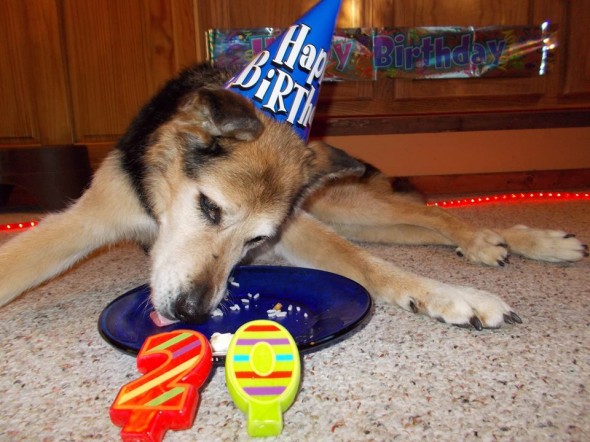
Because of the kindness of strangers Schoep is now receiving weekly laser therapy, pain medication and glucosamine to help with his condition.  What really made me smile today is the story I saw about Schoep.  He just turned 20 on Saturday and received over 1,000 cards and many gifts for his celebration.  The kindness of strangers has given these two companions another year together, and that just gives me goose bumps of happiness.


You can follow Schoep on his Facebook page.

Be Well & Be Happy,
Pet~Pourri

Wednesday, June 12, 2013

Pet First Aid


If you are a parent, then you know how handy a first aid kit can be to take care of a skinned knee or splinter in the finger.  What would you do however if your dog came into the house with a bloody paw because he tore his toe nail or had a puncture wound from running into a branch on a bush or tree? 


I thought a blog on Pet First Aid might be handy information for you to keep on hand.  With the rescue work we do we have seen our fair share of pet injuries.  I remember when we first started our rescue work.  I would freak when a dog came in with a bloody paw and off to the vet we would go.  Usually it was something I could have taken care of at home and saved the cost of the vet visit.  Over the years our vet has taught us a lot about taking care of injuries.  My husband has also become an avid researcher and often will treat a dog exactly the same way our vet would.
 
 
Photo from www.doggenie.com
 

So what are some things you should keep on hand for a first aid kit for your pets?
  • Pet First Aid Book
  • Gauze pads and rolls
  • Adhesive tape or vet wrap (like an ace bandage that sticks to itself)
  • Antibiotic ointment
  • Peroxide
  • Cotton balls and swabs
  • Ice pack
  • Stethoscope
  • Digital thermometer
  • Corn Starch (to stop bleeding if you cut a toe nail or trimmed a beak too short)
  • Disposable gloves.
  • Scissors
  • Tweezers
  • A Muzzle
  • Towels
  • A blanket
  • A pillow case (for confining and treating a cat)
  • Ear cleaning solution
  • Pen light or small flash light

These items will help you do basic first aid and stabilize a pet that does need to make a trip to the vet.  You might also check with your vet to see what items you should have on hand for your specific pet.  You could also purchase a first aid kit at your local pet store.  You might also check to see if your community or vet has education on pet CPR.


As well as a first aid kit you should have the following phone numbers at hand in case of an emergency.

  • Your vet
  • Closest Emergency Vet
  • Pet Poison Hotline – 888-426-4435

Depending on the injury, sometimes you can treat it at home.  A small cut or torn toe nail can be cleaned and wrapped with the dressing changed daily until it heals.  Keep an eye on it though and if it shows signs of infection, contact your vet.
 
Photo from cats.lovetoknow.com
 

Other more serious injuries can be stabilized until you get to the vet. The American Veterinary Medical Association offers some great tips on basic first aid.  I urge all my readers to take a few moments right now to read this.  You never know when this information will come in handy and in an emergency you aren’t going to have time to look online.


Every pet owner should have basic education on first aid care for their pets.  It could make a difference in saving your pets life.  So please take the time to read the link above and put together a first aid kit.


Be Well & Be Happy,
Pet~Pourri