Thursday, June 20, 2013

Why Did The Turtle Cross The Road?

I know…I know… Dumb title and one that is commonly used.  But I just couldn’t resist.  J

One of my co-workers witnessed the horrible demise of a turtle trying to cross the road.  She passed it and turned around to try and help it.  After she got out of the car a truck came by and no more turtle.  She was devastated. 
 
 
Photo from www.silive.com
 

Then yesterday my husband saw a turtle trying to cross the road.  He stopped to help it and was successful.  It turned out to be a pretty good sized snapping turtle who really didn’t appreciate his help.  Of course, as my faithful readers know, this got me to thinking…(look out, she’s thinking again)…  What would you do if you saw a turtle trying to cross the road? 

The first thing you should do is make sure it is safe to stop and assist.  If it’s not, call you local animal control or DNR office to let them know.  No matter how much you want to help, your safety comes first.  The DNR recommends that you do nothing because they can be feisty and there is a chance you will be bitten.  Turtles are also known to carry the salmonella bacteria. 


Why is the turtle in the road in the first place?  A couple reasons:  May and June are egg laying season for turtles and females will leave the water to find dry land to lay their eggs.  They have a hereditary area that they like to go to and sometimes they cross the road.  Other reasons are that it is the path of least resistance, the fact that they like to sun themselves on the concrete, or to avoid rushing water in a culvert after too much rain.
 
 
Photo from totallycoolpix.com
 

Whatever the reason, sometimes they will need a little help to avoid being hit.  Most turtles, if you pick them up by the edges of their shell between their front and back legs, will just hide in their shell.  Snapping turtles on the other hand can be downright ornery.  Snapping turtles are heavy and will put up a fight.  If they are too big or too feisty, use a shovel, stick, or broom to shoo them across the road.  Better to be safe rather than sorry.

There are two rules of thought as to which direction to move them.  Most say move them the direction they were traveling, especially if it is a female laying eggs as they know where they want to lay them.  It’s instinct.  Others say take them back the way they came because they will just have to cross the road again to get back to their natural territory.  If they are on their way to lay eggs, then anywhere from 90 to 120 days the babies will be crossing the road to get to the water.
 
 
Photo from ookaboo.com
 

So with this in mind, be on the lookout for turtles crossing the road anytime between May and September.  After all…they just want to get to the other side.

Be Well & Be Happy
Pet~Pourri

Tuesday, June 18, 2013

Schoep and John


My readers who are dog lovers may have already seen the story about Schoep and his human companion John Unger.  He became a hit sensation when photos were posted of his companion supporting him in the waters of Lake Superior in order to ease the pain from arthritis.


Because of the original photo animal lovers though out the world donated more than $25,000 to help pay for Schoep’s medical expenses.  In honor of the outpouring of support he has received, Schoep’s human companion has started the Schoep Legacy Foundation to help other struggling pet owners.


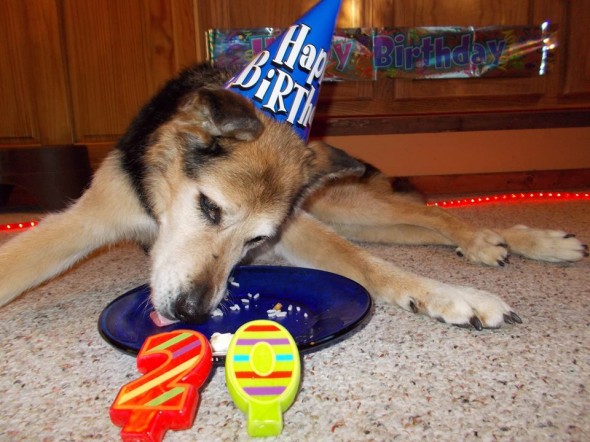
Because of the kindness of strangers Schoep is now receiving weekly laser therapy, pain medication and glucosamine to help with his condition.  What really made me smile today is the story I saw about Schoep.  He just turned 20 on Saturday and received over 1,000 cards and many gifts for his celebration.  The kindness of strangers has given these two companions another year together, and that just gives me goose bumps of happiness.


You can follow Schoep on his Facebook page.

Be Well & Be Happy,
Pet~Pourri

Wednesday, June 12, 2013

Pet First Aid


If you are a parent, then you know how handy a first aid kit can be to take care of a skinned knee or splinter in the finger.  What would you do however if your dog came into the house with a bloody paw because he tore his toe nail or had a puncture wound from running into a branch on a bush or tree? 


I thought a blog on Pet First Aid might be handy information for you to keep on hand.  With the rescue work we do we have seen our fair share of pet injuries.  I remember when we first started our rescue work.  I would freak when a dog came in with a bloody paw and off to the vet we would go.  Usually it was something I could have taken care of at home and saved the cost of the vet visit.  Over the years our vet has taught us a lot about taking care of injuries.  My husband has also become an avid researcher and often will treat a dog exactly the same way our vet would.
 
 
Photo from www.doggenie.com
 

So what are some things you should keep on hand for a first aid kit for your pets?
  • Pet First Aid Book
  • Gauze pads and rolls
  • Adhesive tape or vet wrap (like an ace bandage that sticks to itself)
  • Antibiotic ointment
  • Peroxide
  • Cotton balls and swabs
  • Ice pack
  • Stethoscope
  • Digital thermometer
  • Corn Starch (to stop bleeding if you cut a toe nail or trimmed a beak too short)
  • Disposable gloves.
  • Scissors
  • Tweezers
  • A Muzzle
  • Towels
  • A blanket
  • A pillow case (for confining and treating a cat)
  • Ear cleaning solution
  • Pen light or small flash light

These items will help you do basic first aid and stabilize a pet that does need to make a trip to the vet.  You might also check with your vet to see what items you should have on hand for your specific pet.  You could also purchase a first aid kit at your local pet store.  You might also check to see if your community or vet has education on pet CPR.


As well as a first aid kit you should have the following phone numbers at hand in case of an emergency.

  • Your vet
  • Closest Emergency Vet
  • Pet Poison Hotline – 888-426-4435

Depending on the injury, sometimes you can treat it at home.  A small cut or torn toe nail can be cleaned and wrapped with the dressing changed daily until it heals.  Keep an eye on it though and if it shows signs of infection, contact your vet.
 
Photo from cats.lovetoknow.com
 

Other more serious injuries can be stabilized until you get to the vet. The American Veterinary Medical Association offers some great tips on basic first aid.  I urge all my readers to take a few moments right now to read this.  You never know when this information will come in handy and in an emergency you aren’t going to have time to look online.


Every pet owner should have basic education on first aid care for their pets.  It could make a difference in saving your pets life.  So please take the time to read the link above and put together a first aid kit.


Be Well & Be Happy,
Pet~Pourri


Tuesday, June 11, 2013

Tennessee Walking Horses


Photo from cowboyfrank.net

I wanted to write a blog about horses this week.  While reviewing recent news articles, I came across this one regarding the abuse of Tennessee Walking Horses.  These majestic horses are known for their gait, a ‘running walk’.  They are popular riding horses because of their smooth gait and gentle nature. 


However, the show horses are trained to accentuate their gait into what is called the “Big Lick”.  This is an exaggerated walking gait and often cruel methods are used to achieve this gait.  It seems that some trainers will place chemicals on the horse’s legs that cause severe pain, padded (weighted) horseshoes, and chains in order to train them to this gait.  This training is called Soring.  Here is a link to a video by the HSUS showing their undercover investigation into one trainer, who is was given 3 years probation and fined $75,000.  Warning:  This video is very disturbing. 


The Horsechannel.com states “In the mid-20th century, unscrupulous trainers began to employ cruel techniques now known as soring in order to achieve an even higher, more exaggerated gait that drew throngs of spectators and won blue ribbons. By 1970, the problem had become so widespread that a federal law was enacted to try to put an end to it. The Horse Protection Act has been in place ever since, but according to the agencies charged with policing the Walking Horse show circuit, the abuse still occurs.”

Unfortunately, this act has not done enough to protect the Tennessee Walking Horse and an amendment to prevent all soring tactics is being reviewed. This act got a boost when the president of the Tennessee Walking Horse Breeders and Exhibitors Association supported it.  There is some concern for the future of this breed because of these unscrupulous training methods. 


Photo frm www.tennessean.com

There is a humane way to train these animals.  Horses trained under this method are called Natural Walking Horses.  Here is an example of some humane training methods.  Natural walkers won’t do the “Big Lick” gait because it is not natural to them.  Their natural walking gait is just beautiful.


I learned something new today and wanted to share it with my readers.  Natural is better and kind treatment of animals is the way to achieve this.  All animals are sentient beings.  They need to be treated as such. 

Be Well & Be Happy,
Pet~Pourri

Thursday, June 6, 2013

Indoor vs. Outdoor Cats


I am a strong advocate of keeping your cats indoors.  In my honest opinion, they are just safer that way.  I was having a discussion with a friend at work who just adopted a cat a few months ago.  She was telling me that she started letting him outside.  I cringed when I heard this.  The good news though is that she is a responsible pet owner and only lets him outside when her family is out to keep an eye on him.  I have another friend at work who walks her cat on a leash during the summer time.


Photo from www.petfinder.com

There is a great debate on whether your cat should be indoor or outdoor.  Personally, I believe your cats should be indoor, unless you are responsible and supervise them while outside or keep them on a leash.  The American Humane Association has some great advice to help you make an educated decision as to whether you will let your cat go outside or not.

My major concern is for health issues.  It has been proven that indoor cats live longer and are physically healthier.  There are various diseases and parasites that your cat can pick up when they are outside.  Feline Leukemia and Feline AIDS are two of the worst, but there are many others.  Of course most often when pets get fleas, it is from being outside.  Ticks, ear mites, and worms are also concerns.

Photo from catlovingcare.com
 
There is also the risk of being hurt by other animals, getting hit by cars, and being stolen.  We’ve all heard the stories of cats being set on fire, shot, or tortured.  Then there are those cats that chase a bird or get chased up a tree and then can’t get back down.  I just read an article the other day where a person in a high rise apartment let their cat out on the balcony.  The cat would jump up on the balcony railing.  It was the 17th floor.  Here is the photo and a link to the story on how the photographer got the photo.


This debate is not just happening in the US.  As I was researching this topic I came across the Feline Advisory Board in the UK and they also have an active debate going on.  They list a lot of the same pros and cons I have seen.


One thing to remember is that your cat needs to be kept active and entertained, just like your puppy would.  You might think about getting another cat as a companion (or even a dog. J).  Get some interactive toys.  My cat Merlin used to love this round track thing I had that had a jingle bell in it.  He would lay there and swat the thing around the track for hours.  It also had a cardboard scratching post in the center.  He loved it when I would sprinkle some cat nip in it.  We’ve all seen the videos of cats chasing laser lights, but this is a great way to stimulate your cats hunting instinct. 

Create some places for your cat to climb.  We used to have a floor to ceiling carpeted post with shelves at various intervals.  Merlin loved to climb this and would often lay on the top shelf to look out the windows.  Cats love to lay in windows and bask in the sunshine, so make sure you have a window available for your cat.

Photo from freshome.com
 
While the answer is not black and white, I think the proof that you will have a happier, healthier cat is obvious.  Keep your cat indoors unless you are going to be outside with them and can keep them on a leash. 

Be Well & Be Happy,
Pet~Pourri


Tuesday, June 4, 2013

Stinky Puppies


Last week my husband gave three of our dog’s baths.  I gave two of them baths and still have 4 more to go.  Of course the day after the baths one rolls in stinky stuff and needs another bath.  The second day another one rolls in something and needs another bath.  The two I bathed had also rolled in stinky stuff and that is why they needed baths.  So last night two more rolled in stinky stuff, but it was right before bed so now they have to wait till this afternoon for more baths.

If you have dogs, you know exactly what I am talking about.  Dogs love to roll in stinky stuff.  At our house it is usually rabbit poop, dead animals, dead snakes, or dead worms.  I’ll never forget the day Princess came out of the enchanted forest totally black and stinking so bad I was gagging the whole time I was rinsing her off.  It was so bad I had to rinse her with the garden hose before I could bring her into the house to bathe her.  And of course when she came running to me she had the biggest happiest smile on her face because she was so happy she got to roll in stinky stuff.  I still have no idea what it was but I went into the enchanted forest with a shovel and bucket to remove the stinky patch from the ground.  UGH
 
 
Princess
 

So while discussing with my husband the blog I was writing on Kneady Cats, he said why don’t you write one on why dogs LOVE to roll in stinky stuff.  Off to the Internet to research the topic.

There are several theories.  Some seem really far fetched…like the one that claims they do it to keep parasites off.  I don’t think fleas and ticks have a sense of smell, but you never know.  I’ve never known a stinky dog to not have fleas and ticks because of their smell.  Some make a lot of sense…marking the item to claim it as theirs or trying to disguise their scent for hunting.

I think the one I like best is the Psychology Today article that says “I believe that the real reason that canines roll in obnoxious smelling organic manner is simply an expression of the same misbegotten sense of aesthetics that causes human beings to wear overly loud and colorful Hawaiian shirts.”  This made me chuckle.
 
 
Sophia after Rolling
 

Another common belief is that they don’t like the smell of the shampoo or other grooming products you use on them.  Dogs have a highly developed sense of smell and what smells good to us might not smell so good to them and vice versa.  This got me side tracked and researching a dogs sense of smell.  This PBS article was fascinating.  I recommend taking a few moments to read it.

So now that we have some ideas of why dogs roll in stinky stuff, the obvious question is how do we get them to stop.  Not so easy to do.  A stern voice and No command just do not work for a couple of our pups.  If they find something they want to roll in, they are going to roll in it.  They only way I can get them to stop is to go grab them and take them in the house.  I then go back to that spot and either remove what is causing the offensive (to me) smell or hose it down. 

If your dog likes to roll in feces or dead animals, remove them from the premises.  If this happens while you are walking your dog, keep them on a leash so you can move them past the item they want to roll in.  I had a friend that loved to walk their dogs on the beach.  Whenever there was a dead fish or seaweed on the beach they would make a beeline for it.  He avoided walking the dog’s right after high tide and would often walk the beach before walking his dogs to remove the offensive materials.  That way he and his dogs could still enjoy the beach, but avoid the smell.


Honestly, this is a natural behavior to dogs and it’s something they are just going to do.  So in our case we’ve stocked up on dog shampoo and keep the bucket and shovel handy to remove whatever they are rolling in…when we can find it.  J  If Princess ever comes back smelling the way she did that one time though, I’m going to have to invest in a gas mask.

Be Well & Be Happy,
Pet~Pourri